
What Is Foreseeability?
Foreseeability is a legal concept that asks whether a person could reasonably expect a type of harm under the circumstances. In a personal injury claim, it helps connect what someone knew or should have known to the risk that led to an injury.
Quick Facts About Foreseeability
- Category
- Personal injury law
- Used for
- Assessing risks and responsibility
- Common confusion
- Not the same as proof of negligence
- Often discussed with
- Negligent Security Claims
Key Takeaways About Foreseeability
- The exact way an injury happened needn't be predictable.
- Records can help show what a property owner knew.
- Foreseeability alone doesn't establish fault.
How Foreseeability Works

Foreseeability focuses on the circumstances before an injury. In a negligent security claim, those circumstances may include earlier reports of similar crime. A property owner's knowledge of those reports can be relevant. Related service: Negligent Security Claims.
Related glossary terms: Duty of Care, Negligence, Premises Liability.
The question isn't whether the owner knew the exact details of an attack. The focus is whether signs pointed to a similar kind of danger. For example, reports of assaults near an entrance may help show notice of a security risk.
Duty of care is a separate issue from foreseeability. A claim also considers what the owner did about a known risk and whether those actions were reasonable. The injured person must also connect the claimed security failure to the injury. The facts of the property and the incident shape that analysis.
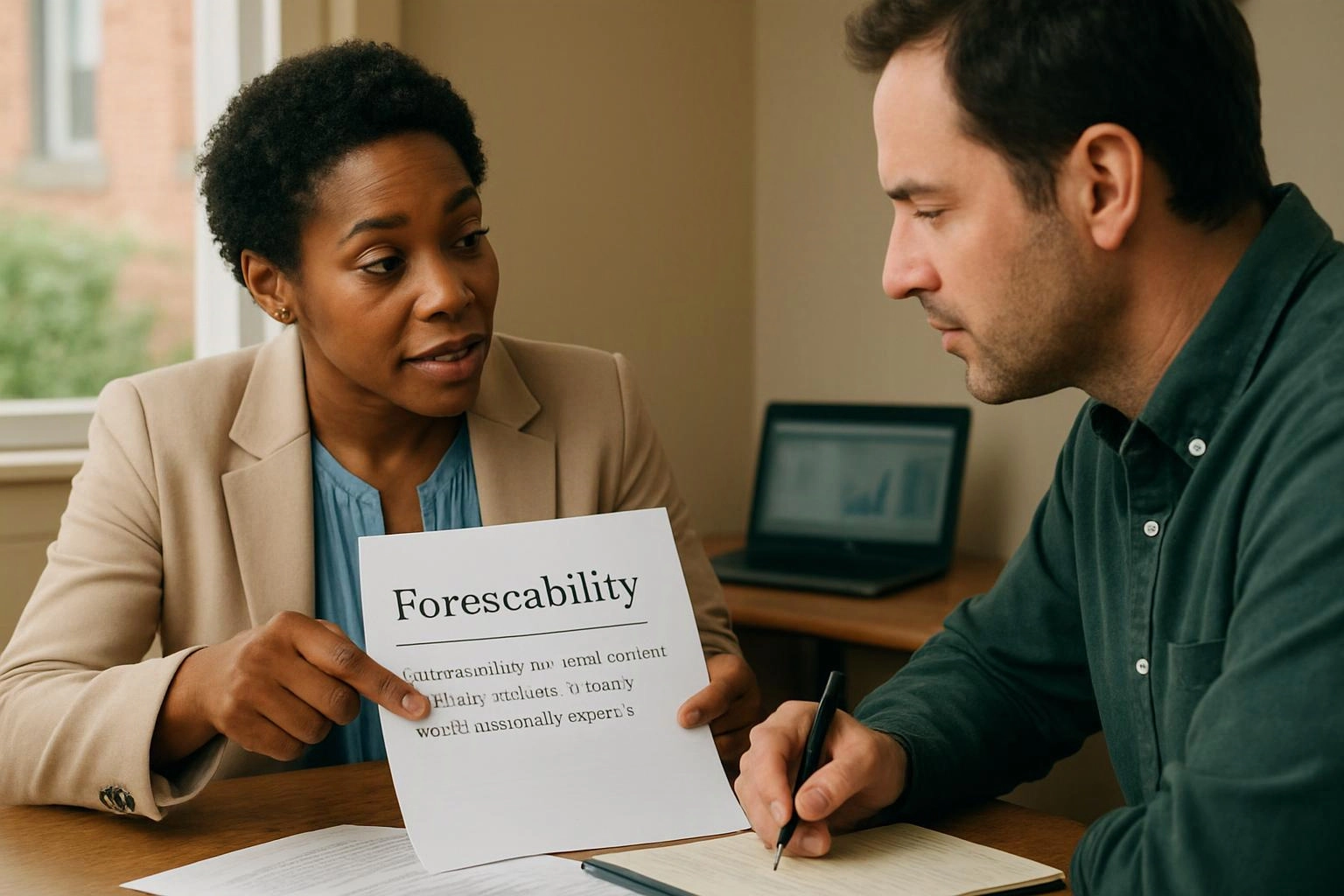
From the Atlanta Auto Law team
When we review negligent security claims, we look for records that may show what the property owner knew. We also check whether the reported danger relates to the place and type of attack. That context helps us assess the claim.
Foreseeability in Practice: A Real-World Example
A visitor is assaulted near an apartment entrance after residents reported similar assaults there. Those reports may support an argument that the property owner had notice of a security risk.
Related Services
Related Terms
Duty of Care
A duty of care is a legal obligation to act with reasonable care toward others.
Negligence
Negligence is a failure to use reasonable care that causes harm to someone else.
Premises Liability
Premises liability is an area of law that deals with injuries linked to unsafe property conditions.
Proximate Cause
Proximate cause is a legal link between someone's conduct and an injury.
Atlanta Auto Law
Have Questions About Foreseeability?
Contact Atlanta Auto Law for practical guidance on Foreseeability and related personal injury attorney work in Druid Hills.