
What Is Negligence?
Negligence is a failure to use reasonable care under the circumstances, causing harm to another person. In a personal injury claim, the injured person generally must connect the careless conduct to the injury and resulting losses. The conduct may involve unsafe driving, poor property maintenance, or another preventable act.
Quick Facts About Negligence
Category
Personal injury liability concept
Used for
Evaluating fault and injury claims
Common confusion
Carelessness alone does not establish causation
Often discussed with
Personal injury attorney
Key Takeaways About Negligence
- Negligence focuses on unreasonable conduct and the harm that follows.
- Evidence must connect the conduct to the claimed injury.
- Negligence is not the same as an unavoidable accident.
How Negligence Works
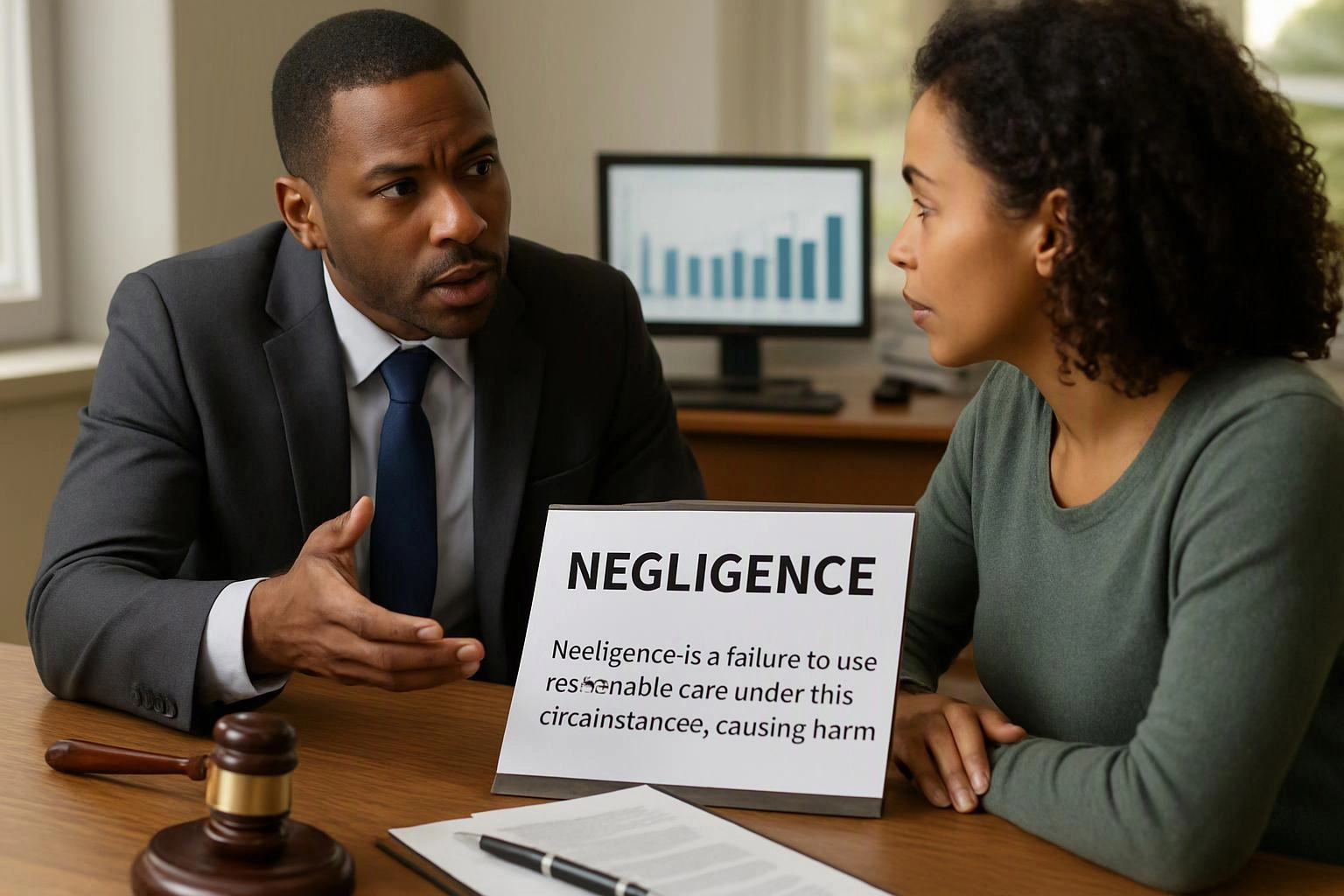
Negligence works as a fault analysis based on the conduct a reasonable person would expect in similar circumstances. The analysis considers whether a duty existed, whether conduct fell below that standard, and whether the conduct caused a legally recognized injury. The injured person also connects the injury to recoverable losses.
Related glossary terms: Causation, Comparative Negligence, Duty of Care.
Evidence can include photographs, medical records, witness accounts, vehicle data, and communications. Comparative Negligence may affect recovery when more than one person contributed to the harm. Causation remains a separate question because careless conduct must have a meaningful connection to the injury. An insurance assessment or court review may weigh conflicting accounts and the timing of events.
From the Atlanta Auto Law team
When we assess negligence, we examine the conduct before the incident, the surrounding conditions, and the claimed injuries. We compare available evidence with each person’s account. Our team also separates proof of careless conduct from proof that the conduct caused specific losses.
Negligence in Practice: A Real-World Example
A driver looks down at a phone and strikes a vehicle stopped at an intersection. The injured occupant may argue that the driver’s distraction caused the crash and the resulting bodily injuries.
Related Services
Related Terms
Causation
Causation is the legal connection between a healthcare professional’s alleged malpractice and a patient’s injury. It…
Comparative Negligence
Comparative Negligence is a legal rule that assigns each party a share of fault for an…
Duty of Care
Duty of Care is a legal obligation to act with reasonable caution toward people who could…
Liability
Liability is legal responsibility for harm, loss, or damage caused by a person, company, or other…
Atlanta Auto Law
Have Questions About Negligence?
Contact Atlanta Auto Law for practical guidance on Negligence and related personal injury attorney work in Druid Hills.