
What Is Causation?
Causation is the legal connection between a healthcare professional’s alleged malpractice and a patient’s injury. It requires evidence that the claimed breach of the professional standard contributed to the harm and that the harm was a legally recognized result of that conduct. Without causation, negligence alone does not establish liability for damages.
Quick Facts About Causation
Category
Medical malpractice element
Used for
Linking care to injury
Common confusion
Causation is not the same as negligence
Also called
Causal connection, Legal causation
Often discussed with
Medical Malpractice Claims
Key Takeaways About Causation
- Causation links conduct to a specific injury.
- Medical records can help trace how harm developed.
- Negligence and causation are separate legal issues.
How Causation Works
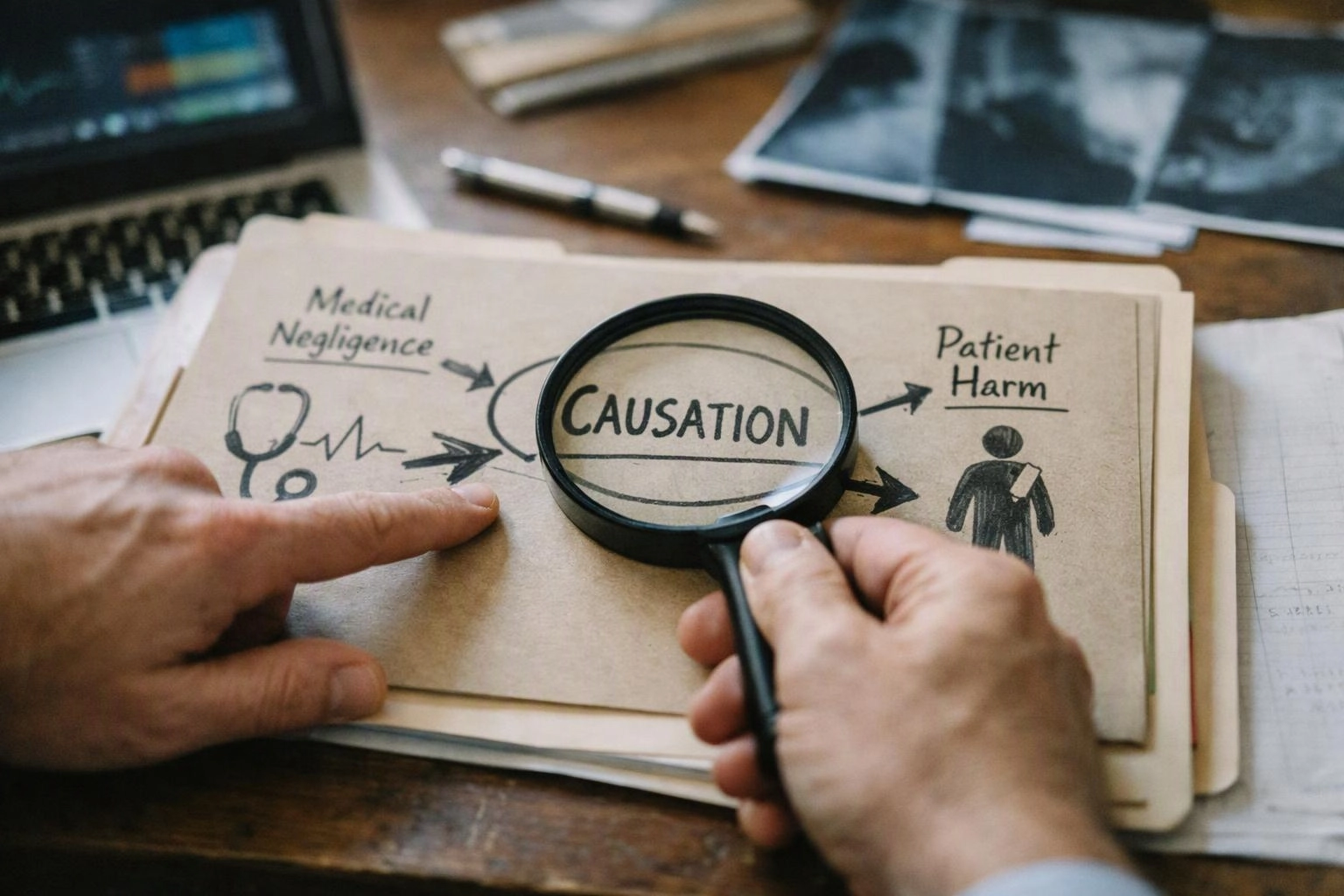
In a medical malpractice claim, Causation analysis examines the sequence between the treatment decision and the claimed injury. The analysis asks what likely happened, when the harm developed, and whether another condition could explain the outcome. Medical records may show changes in symptoms, test results, treatment, and recovery.
Related glossary terms: Proximate Cause, Negligence, Burden of Proof.
Expert testimony can explain whether the alleged error created a meaningful risk of the injury claimed. The review also separates harm caused by the alleged malpractice from harm that existed before treatment or arose independently. A case may show that care fell below the professional standard while failing to connect that care to the claimed damages.
From the Atlanta Auto Law team
When we review a medical malpractice claim, we compare the treatment timeline with the patient’s symptoms, records, and later care. We look for a clear medical explanation connecting the alleged error to the claimed injury, while considering preexisting conditions and other possible causes.
Causation in Practice: A Real-World Example
A patient receives a delayed diagnosis, and the condition worsens before treatment begins. Causation depends on whether medical evidence connects the delay to the additional harm, not merely whether the diagnosis was late.
Related Services
Related Terms
Proximate Cause
Proximate Cause is the legal connection between a person’s conduct and an injury that makes the…
Negligence
Negligence is a failure to use reasonable care under the circumstances, causing harm to another person…
Burden of Proof
Burden of Proof is the obligation to present enough reliable evidence to establish a legal claim…
Expert Witness
An expert witness is a qualified professional who gives specialized opinions to help explain technical, medical…
Atlanta Auto Law
Have Questions About Causation?
Contact Atlanta Auto Law for practical guidance on Causation and related personal injury attorney work in Druid Hills.