
What Is Premises Liability?
Premises liability is a legal theory that may hold a property owner or occupier responsible when a dangerous condition or inadequate security causes injury. The claim usually focuses on whether the responsible party knew or should have known about the risk, had a reasonable chance to address it, and failed to do so.
Quick Facts About Premises Liability
Category
Personal injury legal theory
Used for
Unsafe conditions and inadequate security claims
Common confusion
It covers more than slip and fall injuries
Also called
Premises Negligence, Premises liability claim
Often discussed with
Negligent Security Lawyer, Slip And Fall Lawyer
Key Takeaways About Premises Liability
- The claim focuses on property-related hazards or security failures.
- Evidence may show notice, control, and the steps taken after warning.
- Premises liability is not limited to slip and fall incidents.
How Premises Liability Works
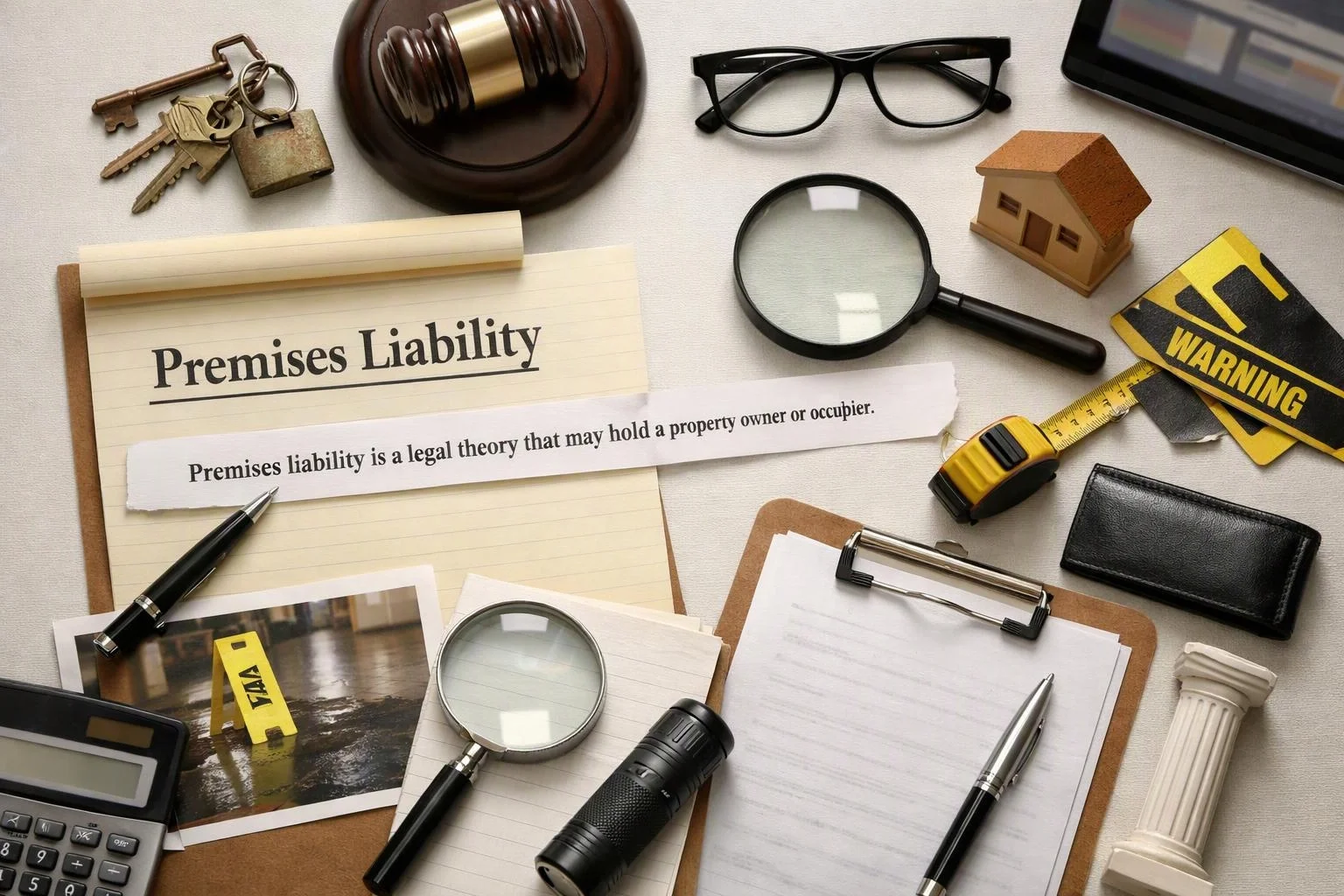
Premises liability analysis examines the property, the hazard, and the relationship between the injured person and the owner or occupier. The central issue is often whether a responsible party knew about the risk or should have discovered it through reasonable care. Evidence can include photographs, incident reports, maintenance records, surveillance footage, and witness statements.
Related glossary terms: Constructive Notice, Duty of Care, Witness Statement.
A claim may involve a physical condition, such as a broken stair, or a security concern, such as poor lighting near an entrance. The facts must connect the property-related problem to the injury. A property owner may have different responsibilities from a tenant, manager, or security company because control over the area can affect responsibility. Negligent security claims apply the same evidence-focused approach to risks such as unauthorized entry or assault on property.
From the Atlanta Auto Law team
When we review premises liability matters, we identify who controlled the area, examine available notice evidence, and connect the condition or security issue to the injury. Our team also checks whether records, photographs, surveillance footage, or witness accounts support the timeline and clarify what happened.
Premises Liability in Practice: A Real-World Example
A person visits an apartment property and is assaulted near a poorly lit entrance after prior security concerns were reported. A negligent security claim may examine the lighting, access controls, notice of earlier risks, and the property operator's response.
Related Services
Related Terms
Constructive Notice
Constructive Notice is a legal finding that a property owner or occupier should have known about…
Duty of Care
Duty of Care is a legal standard requiring a person or organization to act with reasonable…
Witness Statement
A Witness Statement is a written or recorded account from someone who saw, heard, or experienced…
Medical Records
Medical Records are written or electronic files that document a patient's care, condition, testing, treatment, and…
Atlanta Auto Law
Have Questions About Premises Liability?
Contact Atlanta Auto Law for practical guidance on Premises Liability and related personal injury attorney work in Druid Hills.