
What Is Failure to Warn?
Failure to warn is a type of product liability claim based on inadequate warnings about a product's risks. The claim concerns whether a company should have alerted users to a danger and whether the lack of an adequate warning contributed to an injury.
Quick Facts About Failure to Warn
- Category
- Product liability
- Used for
- Claims involving inadequate product warnings
- Common confusion
- A warning claim is distinct from a design defect claim.
- Also called
- Inadequate warning claim
- Often discussed with
- Defective Product Claims
Key Takeaways About Failure to Warn
- The product's design and the warning are separate issues.
- Keep the packaging and instructions after an injury.
- A visible label isn't always an adequate warning.
How Failure to Warn Works
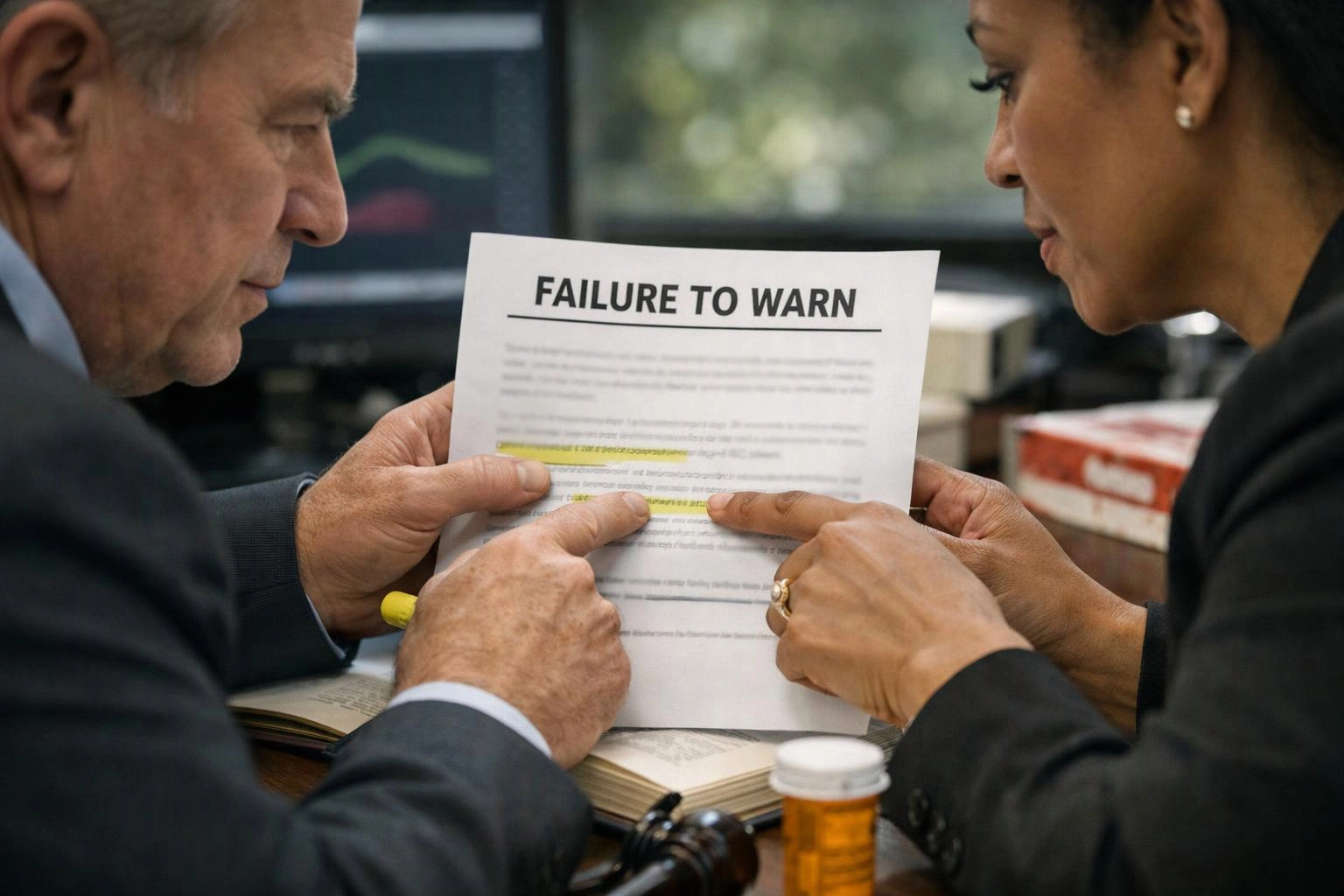
A failure to warn claim looks at the information a company gave about a product. The claim may focus on a label, a manual or another message. It also considers whether the company knew or should have known about the risk. Related service: Defective Product Claims.
Related glossary terms: Product Liability, Foreseeability, Proximate Cause.
The wording and placement of a warning can affect whether a user notices and understands it. A label might mention heat without explaining a risk of fire. A court can consider the product's likely use and what a reasonable user would expect.
A warning claim also connects the missing or unclear information to the injury. For example, the injured person may explain how a clear warning would have changed their use. A design defect claim raises a different question about the product's design.
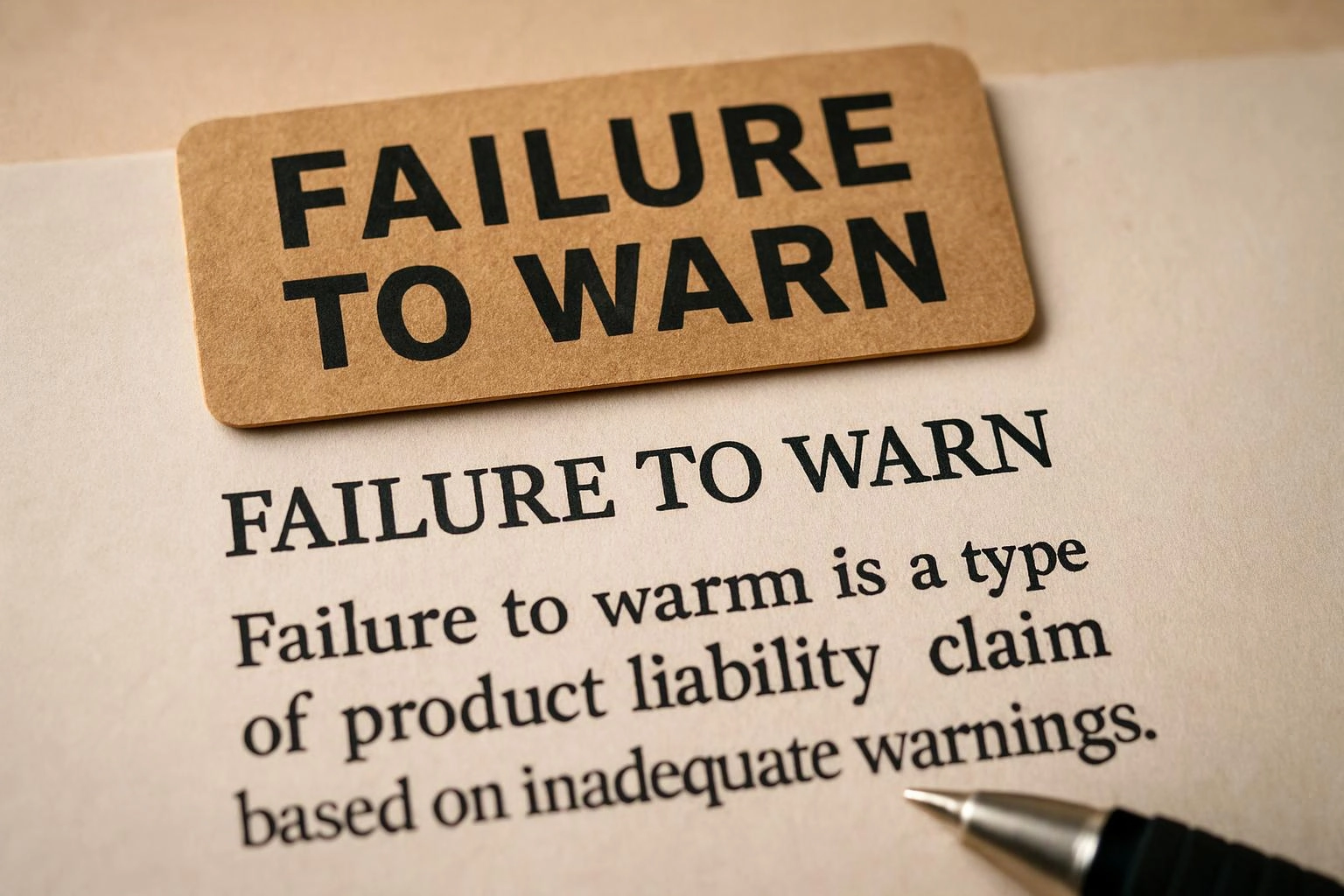
From the Atlanta Auto Law team
When we review a defective product claim, we look for the warnings that came with the product. We also compare the packaging with the instructions the user received. Photos of the label can help preserve details that may change after an incident.
Failure to Warn in Practice: A Real-World Example
A person uses a battery-powered scooter that has no warning about a fire risk during charging. The battery catches fire and burns the person, who says a clear warning would have changed how they charged it.
Related Services
Related Terms
Product Liability
Product liability is an area of law that addresses harm linked to defective products.
Foreseeability
Foreseeability is a legal concept that asks whether a person could reasonably expect a type of harm under the circumstances.
Proximate Cause
Proximate cause is a legal link between someone's conduct and an injury.
Damages
Damages are money sought or awarded in a legal claim for harm or loss.
Atlanta Auto Law
Have Questions About Failure to Warn?
Contact Atlanta Auto Law for practical guidance on Failure to Warn and related personal injury attorney work in Druid Hills.