
What Is Thermal Runaway?
Thermal Runaway is a process in which a battery cell heats itself through chemical reactions that become hard to stop. In a lithium-ion battery, the rising heat can release flammable gases and lead to fire. The process can also spread to nearby cells in the battery pack.
Quick Facts About Thermal Runaway
- Category
- Battery failure process
- Applies to
- Lithium-ion battery cells
- Common confusion
- Ordinary battery overheating
- Often discussed with
- Lithium-Ion Micromobility Battery Fire Injury Claims, Defective Product Claims
Key Takeaways About Thermal Runaway
- The cell's own reactions drive the heating.
- Battery damage may help explain a fire claim.
- An overheated battery isn't always in thermal runaway.
How Thermal Runaway Works
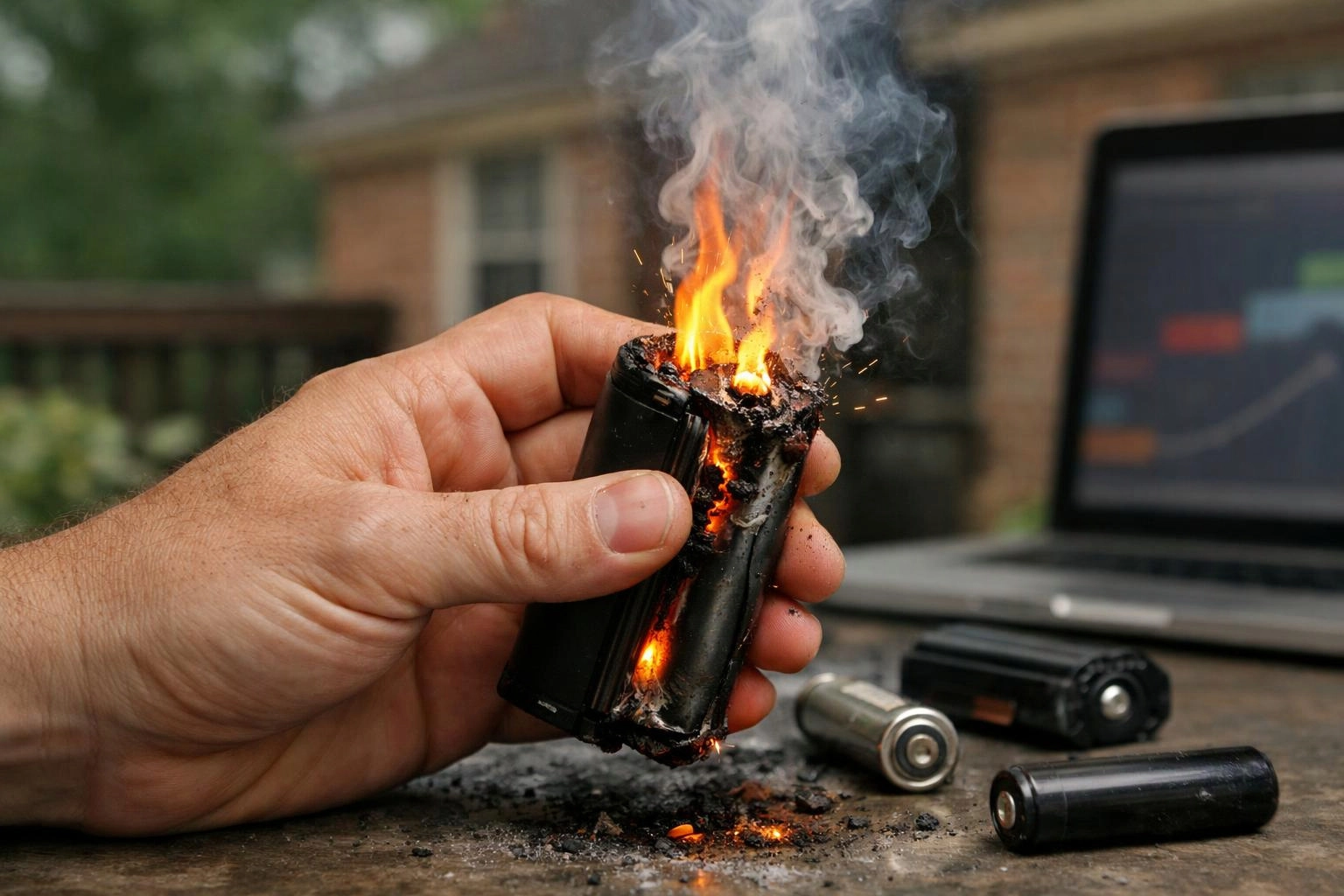
Thermal runaway can begin when damage inside a cell creates an unwanted path for electric current. A defect, physical impact, or charging problem may contribute to that damage. The unwanted current can produce heat inside the cell. Related service: Lithium-Ion Micromobility Battery Fire Injury Claims.
Related glossary terms: Product Liability, Failure to Warn, Burn Degrees.
Heat can break down materials that normally keep parts of the cell apart. That breakdown can trigger further reactions and release gas. Pressure may build until the cell vents its contents.
A battery pack holds cells close together. Heat from a failing cell can affect nearby cells, so damage may spread through the pack. The visible fire damage doesn't always reveal where the failure began. Examining the pack and its charging equipment can help clarify the sequence of events.
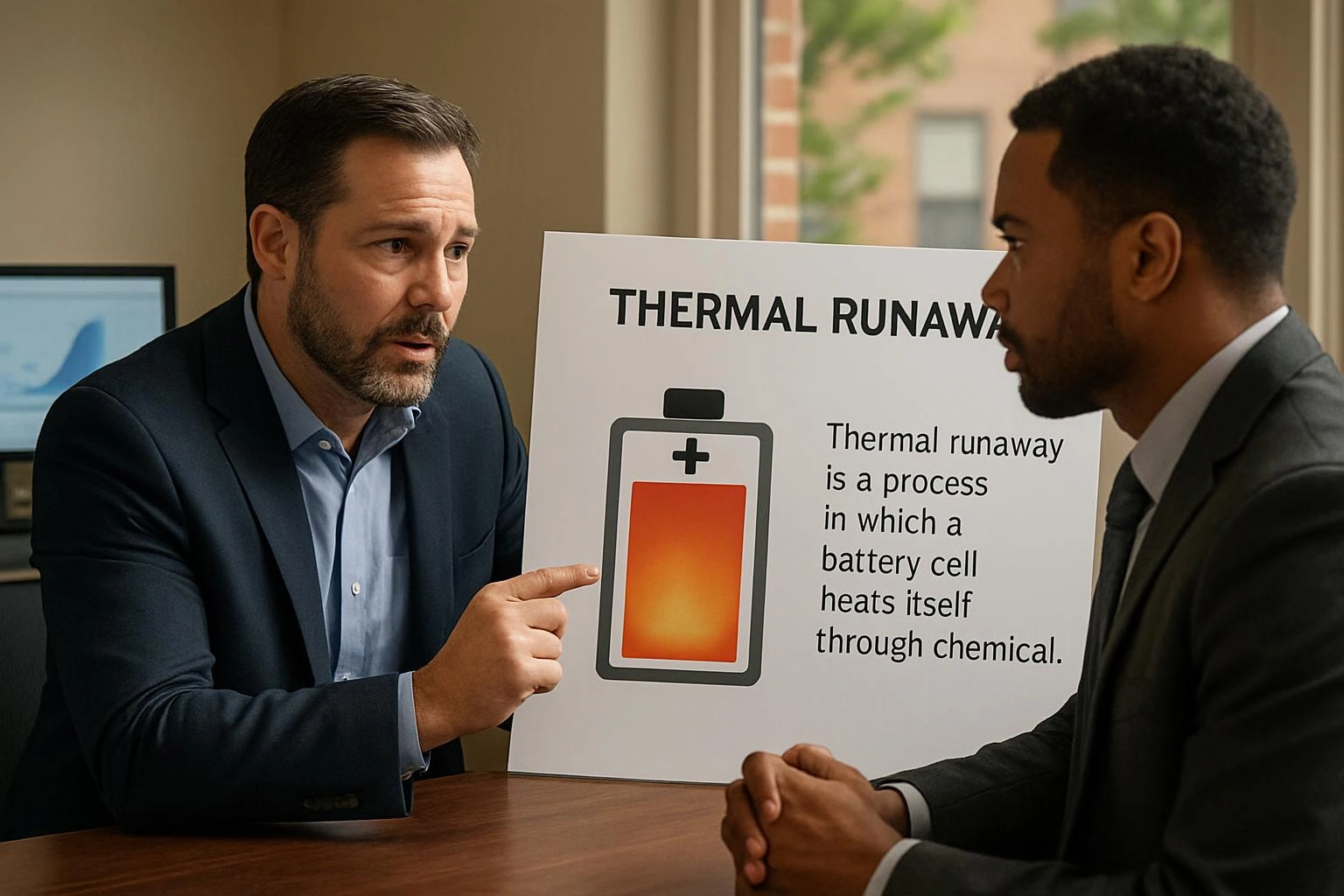
From the Atlanta Auto Law team
When we review a battery fire injury claim, we look at what the records show about the battery and charger. We also consider whether product information or witness accounts help explain the fire. A damaged pack alone doesn't establish who was responsible.
Thermal Runaway in Practice: A Real-World Example
An electric scooter battery catches fire while charging in an apartment. The rider suffers burns, and the claim examines whether a cell failure contributed to the fire.
Related Terms
Product Liability
Product liability is an area of law that addresses harm linked to defective products.
Failure to Warn
Failure to warn is a type of product liability claim based on inadequate warnings about a product's risks.
Burn Degrees
Burn degrees are medical classifications that describe how deeply a burn damages skin and underlying tissue.
Proximate Cause
Proximate cause is a legal link between someone's conduct and an injury.
Atlanta Auto Law
Have Questions About Thermal Runaway?
Contact Atlanta Auto Law for practical guidance on Thermal Runaway and related personal injury attorney work in Druid Hills.