
What Is Implied Consent?
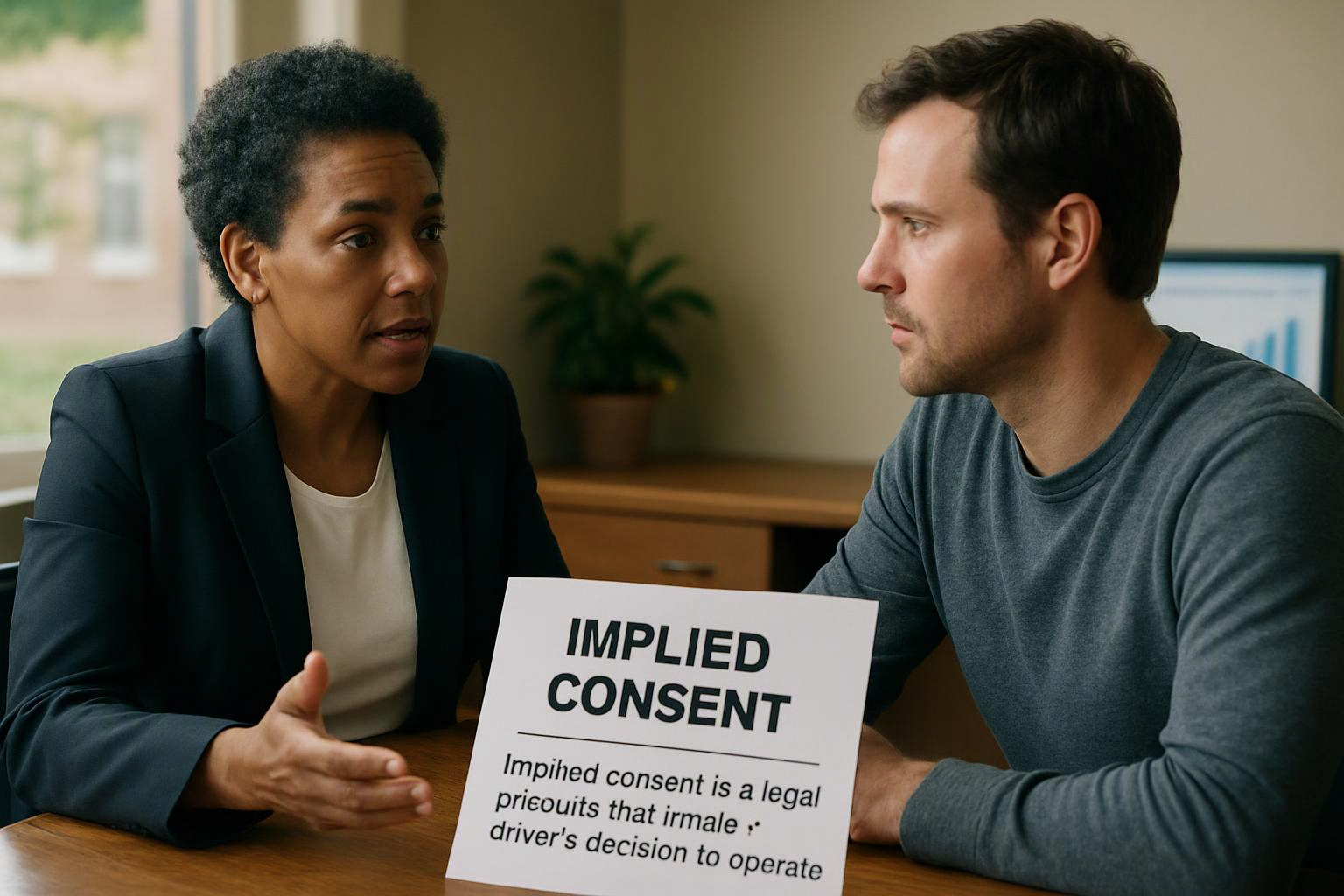
Implied Consent is a legal principle that treats a driver's decision to operate a vehicle as agreement to certain lawful alcohol or drug testing procedures. In a drunk driving accident claim, the principle may affect how authorities address a suspected impaired driver. It does not by itself prove impairment, fault, or liability for a crash.
Quick Facts About Implied Consent
Category
Driving and evidentiary principle
Used for
Alcohol and drug testing disputes
Common confusion
Consent does not establish fault
Also called
Implied consent law, Implied Consent Doctrine
Often discussed with
Drunk Driving Accident Claims
Key Takeaways About Implied Consent
- Implied consent arises from driving under applicable law.
- A testing dispute can affect evidence in a claim.
- Consent is not the same as admitting impairment.
How Implied Consent Works

Implied Consent connects the act of driving with agreement to certain testing procedures authorized by law. A suspected impaired driver may face a request for chemical testing after an encounter with law enforcement. The driver's response, the officer's conduct, and the testing process can all affect the evidence that follows.
Related glossary terms: Dram Shop Law, Admission Of Liability, Burden Of Proof.
Implied consent has a different role from an admission of liability. A refusal, delay, or disputed test may raise questions about evidence, but the issue does not automatically establish that a driver was impaired or caused a collision. In a claim, chemical testing records are reviewed alongside crash reports, witness accounts, medical records, and other available evidence. The related drunk driving claim still requires analysis of causation and the injured person's losses.
From the Atlanta Auto Law team
When we handle a drunk driving accident claim, we examine how any testing request arose and how officers documented the driver's response. We compare those records with crash evidence, witness accounts, and medical documentation. Our team treats implied consent as one part of the evidence, not a substitute for proving causation.
Implied Consent in Practice: A Real-World Example
A driver suspected of impairment causes a collision after leaving a social event. The driver disputes a requested chemical test, and the claim analysis considers that dispute alongside the crash report, witness statements, and evidence of the injured person's losses.
Related Services
Related Terms
Dram Shop Law
Dram Shop Law is a legal rule that may hold an alcohol seller or provider responsible…
Admission Of Liability
Admission Of Liability is a statement or action in which a party accepts responsibility for causing…
Burden Of Proof
Burden Of Proof is the obligation to present enough reliable evidence to establish a legal claim…
Negligence
Negligence is a legal basis for a personal injury claim when a person or organization fails…
Atlanta Auto Law
Have Questions About Implied Consent?
Contact Atlanta Auto Law for practical guidance on Implied Consent and related personal injury attorney work in Druid Hills.