
What Is a T-Bone Collision?
T-Bone Collision is a side-impact crash in which the front of one vehicle strikes the side of another vehicle, forming a shape similar to the letter T. The impact may occur at an intersection, parking area, or roadway. Investigators examine vehicle positions, traffic controls, damage patterns, witness accounts, and available video.
Quick Facts About T-Bone Collision
Category
Side-impact motor vehicle crash
Used for
Describing collision direction and vehicle damage
Common confusion
Crash type does not establish fault
Also called
Broadside collision, Side-impact collision
Often discussed with
Car Accident Claims
Key Takeaways About T-Bone Collision
- The striking vehicle hits the side of another vehicle.
- Intersection evidence often helps explain who had the right of way.
- A side-impact crash is not automatically the other driver’s fault.
How T-Bone Collision Works
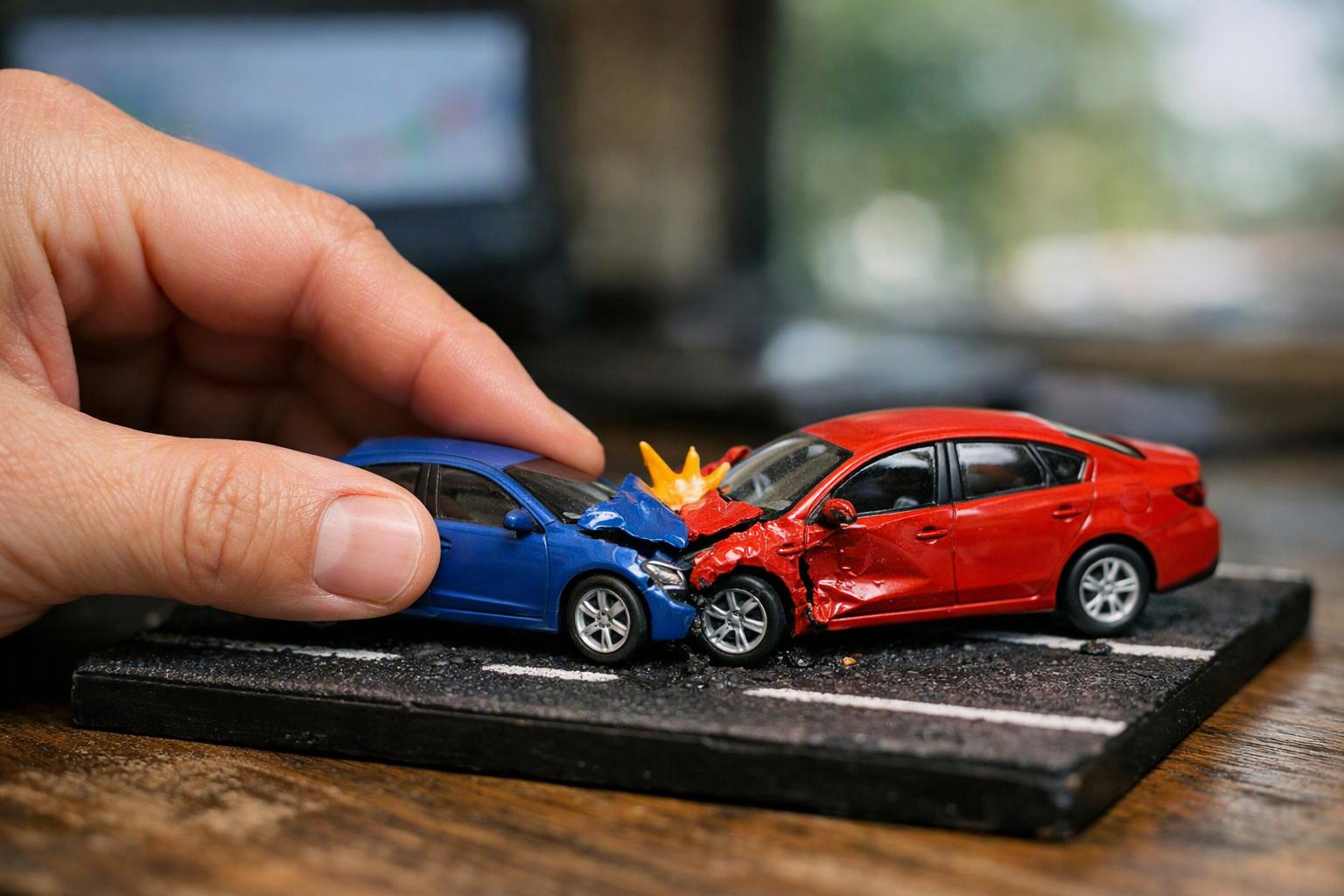
T-Bone Collision describes the direction of impact, not the legal result of a claim. The front of one vehicle contacts the side of another vehicle, often near a door, pillar, or rear quarter panel. The force and injury risk depend on vehicle speed, impact location, occupant position, restraints, and available side protection.
Related glossary terms: Accident Reconstruction, Bodily Injury, Negligence.
Accident analysis compares the vehicles’ final positions with roadway evidence and driver accounts. Investigators may review traffic signals, stop signs, lane markings, photographs, damage transfer, event data, witness statements, and camera footage. A side-impact crash can involve disputed right-of-way, turning movements, unsafe lane changes, or a driver who entered an intersection after failing to yield. The collision pattern helps organize the investigation, but additional evidence is needed to assess responsibility.
From the Atlanta Auto Law team
When we review a T-bone collision, we organize the evidence around vehicle movement, right-of-way, and the point of impact. We compare photographs, statements, medical records, roadway conditions, and available video to test whether the collision account matches the physical evidence.
T-Bone Collision in Practice: A Real-World Example
A driver enters an intersection while another vehicle travels through the crossing and strikes the driver-side door. The claim may turn on the traffic signal, witness accounts, vehicle damage, and whether either driver had a clear opportunity to avoid the collision.
Related Services
Related Terms
Accident Reconstruction
Accident Reconstruction is the analytical process of examining a crash to determine how it happened. A…
Bodily Injury
Bodily Injury is physical harm suffered by a person because of an accident, another person’s conduct…
Negligence
Negligence is a legal basis for a personal injury claim when a person or organization fails…
Comparative Negligence
Comparative Negligence is a legal rule that assigns each party a share of responsibility for an…
Atlanta Auto Law
Have Questions About T-Bone Collision?
Contact Atlanta Auto Law for practical guidance on T-Bone Collision and related personal injury attorney work in Druid Hills.