
What Is Subrogation?
Subrogation is a legal process that allows an insurer or another payer to seek repayment from the party responsible for a loss after covering an insured claim. In an injury case, subrogation may involve health insurers, benefit plans, or medical providers asserting repayment rights against a settlement or judgment.
Quick Facts About Subrogation
Category
Insurance and injury claims
Used for
Repayment after claim payments
Common confusion
A repayment claim is separate from damages
Also called
Subrogation rights
Often discussed with
Insurance Bad Faith Lawyer
Key Takeaways About Subrogation
- Subrogation concerns repayment rights after another party covers a loss.
- A settlement may need to account for valid repayment claims.
- Subrogation is not the same as the injured person's compensation claim.
How Subrogation Works
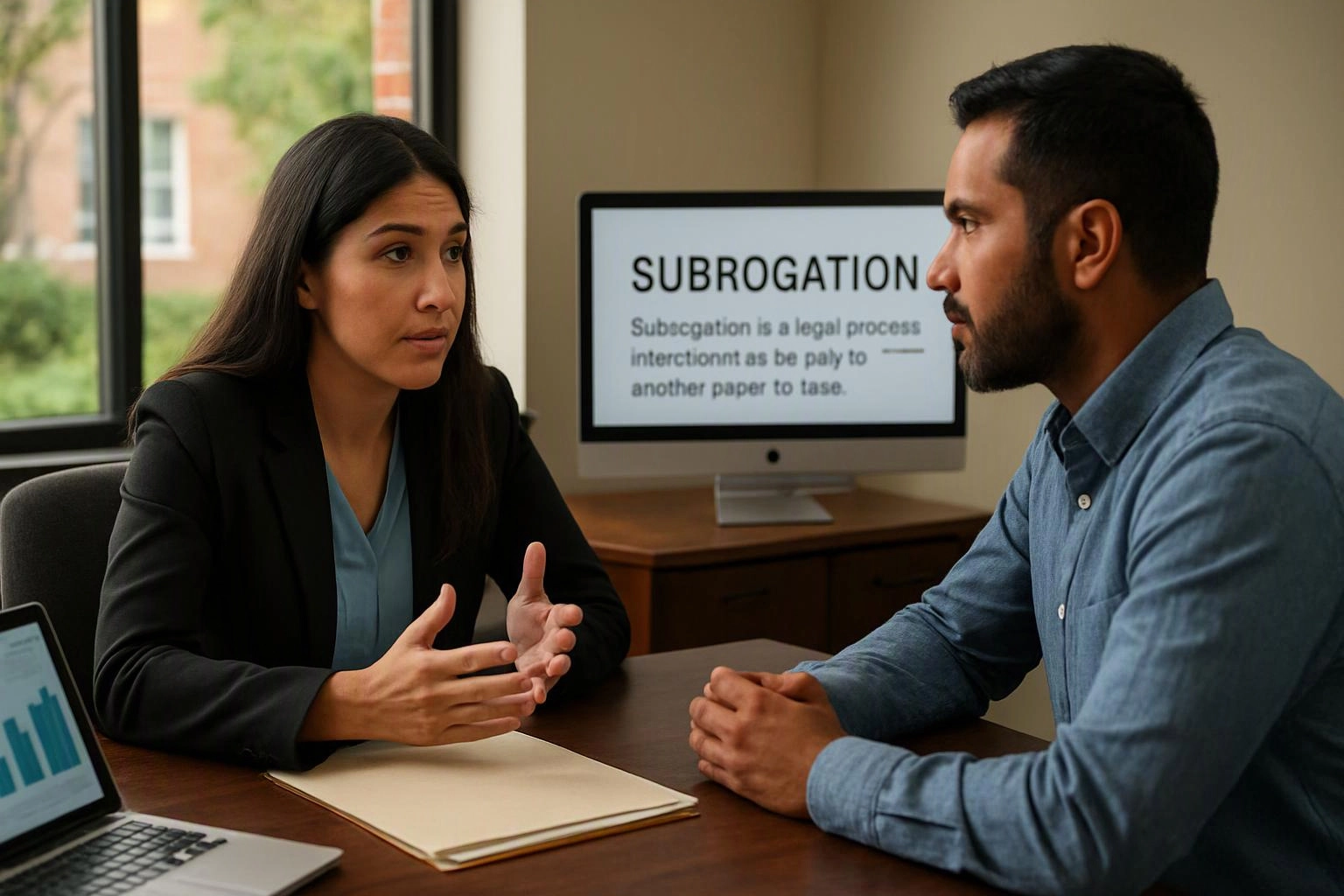
Subrogation begins after an insurer, benefit plan, or another payer covers losses connected to an injury. The payer then reviews whether another person or insurer caused the loss. If so, the payer may seek repayment from the responsible party or from funds recovered through the injury claim.
Related glossary terms: Bodily Injury, Economic Damages, Medical Records.
Repayment rights depend on the documents supporting the claim, the payments made, and the terms governing the payer's interest. A settlement review should identify these claims before funds are distributed. The review can also examine whether the claimed amount relates to the accident and whether the payer has reduced its demand.
How It Appears in an Injury Claim
An injured person may have a bodily injury claim against a driver while a health plan pays related treatment bills. The bodily injury claim seeks compensation from the responsible party. The health plan's subrogation claim seeks repayment from the recovery connected to those bills.
From the Atlanta Auto Law team
When we handle an injury claim, we identify payers that may assert repayment rights and request records supporting each demand. We compare the claimed payments with the accident-related treatment and account for valid subrogation issues during settlement discussions. We also explain how a repayment claim can affect the client's net recovery.
Subrogation in Practice: A Real-World Example
A driver causes a collision, and the injured person’s health plan pays treatment bills before the injury claim resolves. During settlement work, the plan asserts a subrogation claim, so the settlement review addresses whether the claimed bills relate to the collision and what amount should be repaid.
Related Services
Related Terms
Bodily Injury
Bodily Injury is physical harm suffered by a person, such as a broken bone, concussion, or…
Economic Damages
Economic Damages are measurable financial losses linked to a workplace injury, such as medical treatment, lost…
Medical Records
Medical Records are written or electronic files that document a patient's care, condition, testing, treatment, and…
Uninsured Motorist
An Uninsured Motorist is a driver who has no liability insurance available to pay for injuries…
Atlanta Auto Law
Have Questions About Subrogation?
Contact Atlanta Auto Law for practical guidance on Subrogation and related personal injury attorney work in Druid Hills.