
What Is Hearsay?
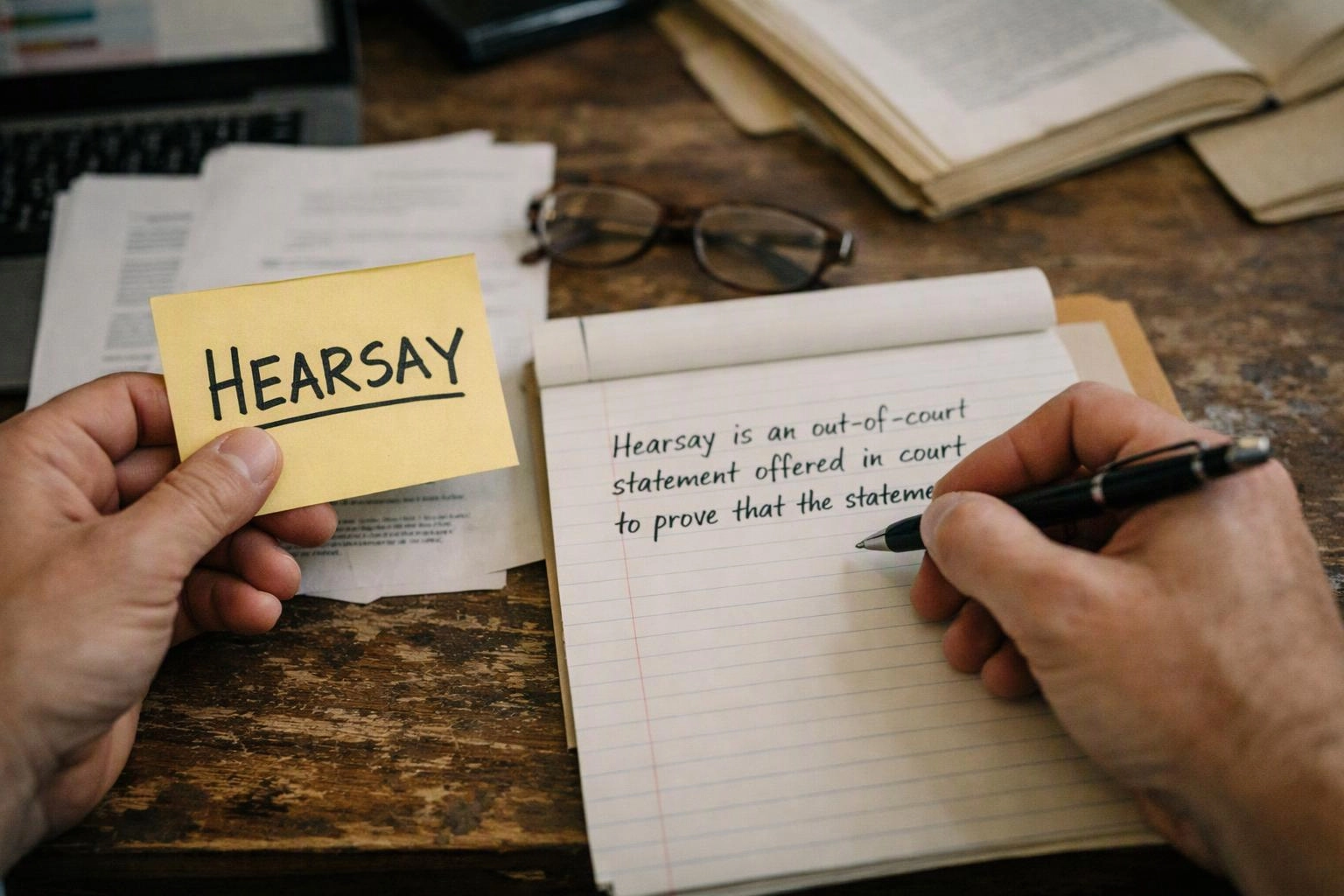
Hearsay is an out-of-court statement offered in court to prove that the statement is true. The statement may be spoken, written, or communicated through conduct. Courts may exclude hearsay unless an exception applies or the statement serves another purpose, such as showing its effect on the listener or explaining a later action.
Quick Facts About Hearsay
Category
Evidence rule
Used for
Testing statements offered as proof
Common confusion
All out-of-court statements are not automatically hearsay
Often discussed with
Personal injury attorney
Key Takeaways About Hearsay
- The statement came from outside the courtroom.
- The purpose of the statement controls the analysis.
- Hearsay is not automatically excluded in every situation.
How Hearsay Works
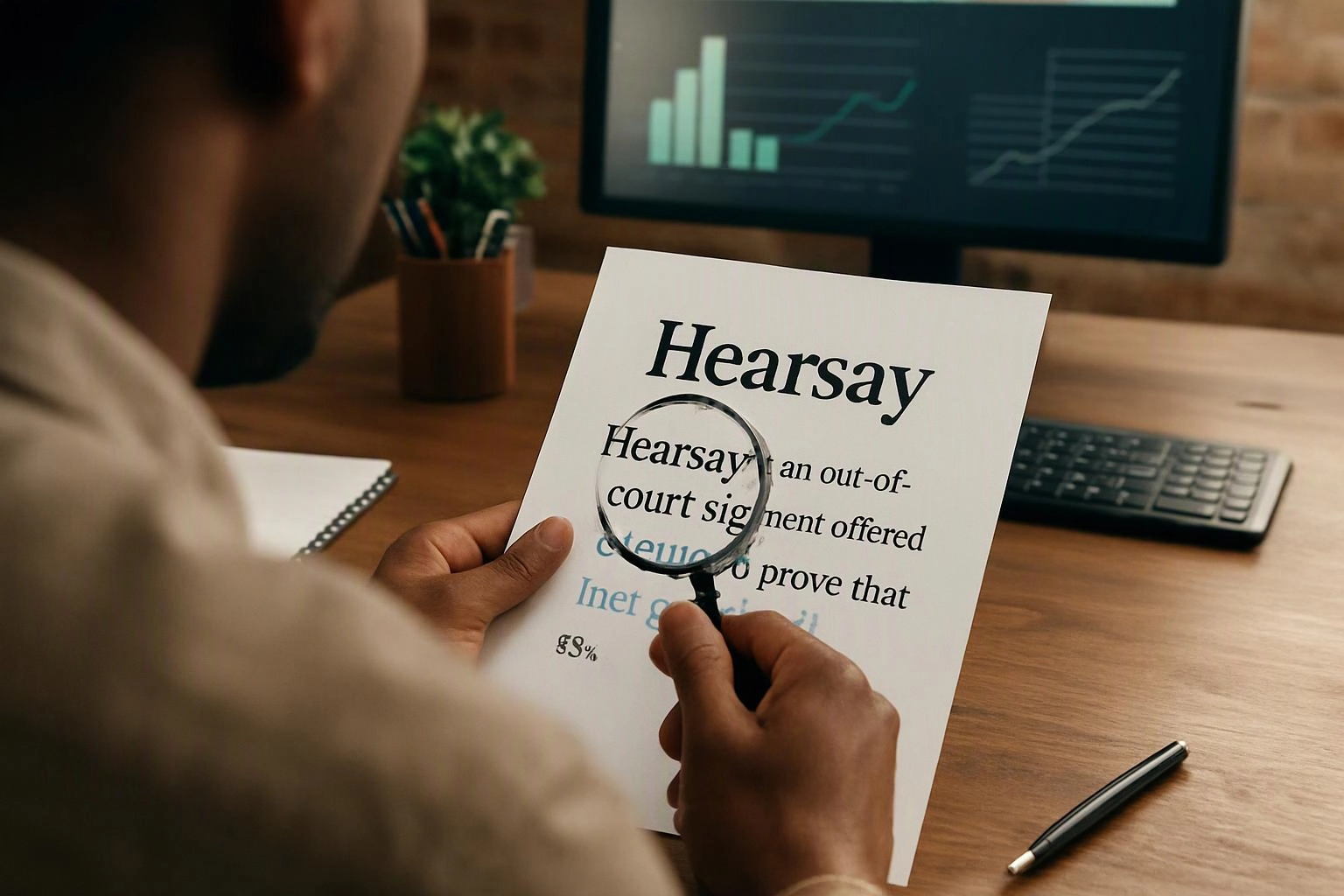
Hearsay analysis begins with the purpose for offering a statement. If a party offers an out-of-court statement to prove the truth of its content, the court may treat the statement as hearsay. If the statement is offered to show notice, explain conduct, or establish its effect on a listener, the same words may serve a different evidentiary purpose.
Related glossary terms: Admissibility, Deposition, Expert Witness.
Courts examine the source, timing, and purpose of the statement. A witness repeating what another person said may raise a hearsay issue, but the court also considers whether an exception or exclusion applies. Admissibility depends on the reason for offering the statement and the applicable evidence rules. A statement may also contain several layers, with each layer requiring separate analysis.
From the Atlanta Auto Law team
When we prepare a personal injury case, we identify who made each important statement and why the statement is being offered. We check whether the statement supports the truth of a fact, shows notice, or fits an applicable exception. We also separate firsthand testimony from repeated accounts.
Hearsay in Practice: A Real-World Example
After a collision, a witness testifies that another driver said, “I was looking at my phone.” If the statement is offered to prove the driver was distracted, the court may analyze it as hearsay and consider whether an exception or other rule applies.
Related Services
Related Terms
Admissibility
Admissibility is the legal determination that evidence may be presented to a court or considered by…
Deposition
A deposition is a formal question-and-answer session in which a witness gives sworn testimony before trial…
Expert Witness
An expert witness is a qualified professional who gives specialized opinions to help explain technical, medical…
Preservation of Evidence
Preservation of Evidence is the process of protecting and documenting information, objects, and conditions that may…
Atlanta Auto Law
Have Questions About Hearsay?
Contact Atlanta Auto Law for practical guidance on Hearsay and related personal injury attorney work in Druid Hills.