Car Accident Mistakes to Avoid After a Crash
Car accident mistakes to avoid include leaving the scene, admitting fault, delaying medical care, failing to document evidence, speaking carelessly with insurers, accepting an early settlement, posting about the crash, and handling a serious claim alone. Atlanta Auto Law helps review the facts, protect claim evidence, and pursue the compensation supported by the accident and injuries.
Written by Ronnie Mabra
Request an Estimate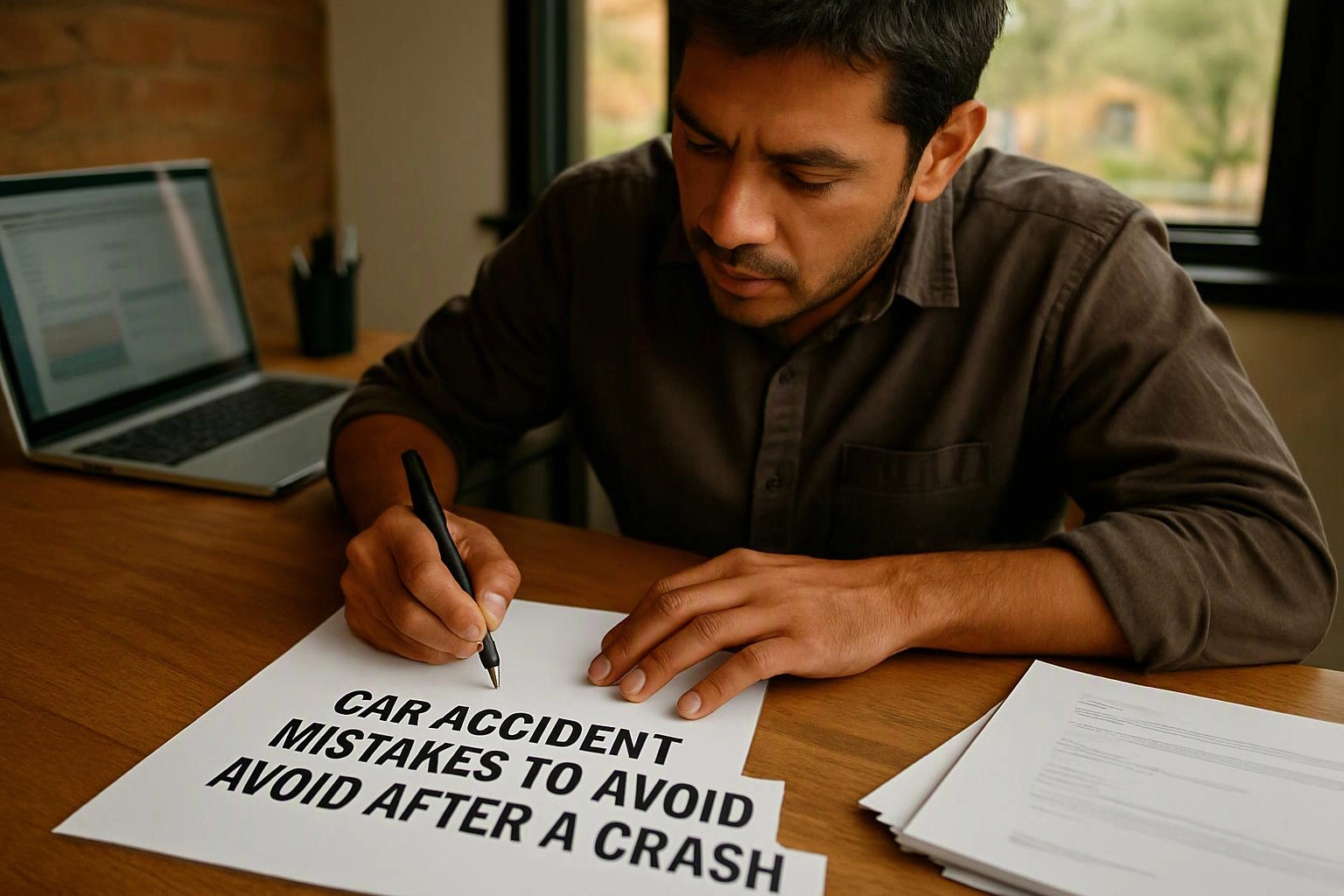
What Should You Avoid Doing After a Car Accident?
Post-crash conduct creates risks for personal injury claims and insurance recovery. The most damaging mistakes involve leaving the scene, admitting fault, delaying medical care, losing evidence, giving careless statements, settling too early, posting online, and managing a serious claim without legal review.
These choices can affect both a personal injury claim and an insurance claim. Ronnie Mabra is the author of this guide, and our team uses the available facts to identify evidence problems and protect the claim record.
Mistake: Leaving the Crash Scene Without Exchanging Information
Leaving a crash scene without exchanging driver and witness information can create a hit-and-run concern and make fault harder to prove. People sometimes leave because they feel shaken, believe the damage is minor, or expect the other driver to handle the report.
The cost can include lost contact information, weaker witness evidence, and an incomplete police report. If you can do so safely, remain at the scene, request emergency response when needed, exchange information, and report the traffic collision. We help assess what evidence remains when information was not collected.
Mistake: Admitting Fault or Guessing What Happened
Admitting fault or guessing about a traffic collision can affect the liability analysis. Stress can cause a driver to apologize, overlook another vehicle, or describe events before all facts are known.
The cost may be a careless insurance statement that supports a comparative fault argument. Give accurate facts, avoid speculation, and let the evidence show what happened. We review statements, roadway conditions, vehicle positions, and other liability evidence.
Mistake: Delaying Medical Care After the Crash
Delayed medical care can make it harder to connect injury symptoms to the crash. Pain from whiplash or other injuries may not be clear immediately, so some people wait to seek a medical evaluation.
The cost can include a gap in medical records and questions about the causal connection between the collision and the injury. Seek appropriate care and describe your symptoms accurately to your healthcare provider. We organize medical records and use them to evaluate how the injuries developed.
Mistake: Failing to Document the Accident and Your Injuries
Failing to document accident evidence can leave important facts dependent on memory. People may focus on moving vehicles or arranging care and forget accident scene photographs, vehicle damage, witness statements, and injury documentation.
The cost can be weaker preservation of evidence during the claim investigation. When it is safe, preserve photographs, contact details, medical records, and messages related to the collision. Our team reviews the available evidence and identifies gaps that may affect the injury claim.
Mistake: Giving a Recorded Statement Without Understanding the Claim
A recorded statement gives an insurance adjuster a lasting version of the claimant’s account. An adjuster may ask about the crash, medical history, prior injuries, work, and daily activities before the claim is fully understood.
The cost can be confusion about the claimant statement or statements taken out of context during the claim investigation. Do not guess or minimize symptoms, and understand what the insurance company is asking before responding. We help prepare a clear account supported by the records.
Mistake: Accepting an Early Settlement Before Injuries Are Clear
An early settlement offer may not account for future medical treatment, lost income, pain and suffering, or the full effect of an injury. People may accept quickly because bills are arriving or the insurance company presents the offer as final.
The cost can be a release of claims that prevents later recovery for related losses. Review the settlement offer and settlement release before signing anything. We evaluate the known damages, possible future needs, and the terms of the proposed release.
Mistake: Posting About the Crash or Your Recovery Online
Social media posts can affect an insurance claim even when the post seems harmless. Photographs, location details, comments, and online statements may be used by an insurance defense team to challenge the reported injury or recovery.
The cost can include privacy concerns and disputed evidence about pain, activity, or fault. Avoid posting about the crash, injuries, treatment, or settlement, and review privacy settings without deleting relevant evidence. We consider public posts as part of the claim record when evaluating risk.
Mistake: Repairing or Discarding the Vehicle Before Evidence Is Preserved
Repairing or discarding a damaged vehicle can remove physical evidence before a vehicle inspection. Important information may include vehicle damage, repair records, and available black box data.
The cost can be a harder dispute over the force of the impact, crash mechanics, or the condition of the vehicle. Preserve repair records and ask that relevant physical evidence be considered before disposal or major repairs. We assess whether further inspection or records may support the liability analysis.
Mistake: Handling a Serious Injury Claim Without Legal Review
Handling a serious injury claim alone can make insurance coverage, liability evidence, and damages harder to evaluate. A claimant may not know whether the settlement offer accounts for lost income, treatment, or pain and suffering.
The cost can include accepting a weak claim position or overlooking evidence during claim negotiation. Contact a personal injury attorney when the injury is serious, fault is disputed, or the insurance company challenges the claim. We review the facts, assess damages, and communicate with the insurance company when appropriate.
What Should You Do Immediately After a Crash?
The safest immediate response focuses on emergency response, scene safety, medical care, the police report, and evidence collection. Each step helps preserve facts without requiring you to decide fault at the crash scene.
Which Evidence Can Strengthen a Car Accident Claim?
Useful claim evidence connects the collision to fault, injuries, and financial losses. The value of each record depends on how clearly it supports the facts of the car accident.
| Evidence | What it may show |
|---|---|
| Photographs | Road conditions, vehicle positions, visible injuries, and property damage. |
| Video footage | Traffic movement, timing, impact details, or conduct before the crash. |
| Witness evidence | Independent observations about the collision and driver actions. |
| Medical records | Symptoms, diagnoses, treatment, and the connection between the crash and injuries. |
| Income records | Work missed and lost income caused by the injury. |
| Vehicle damage records | Damage condition, repair history, inspection findings, and related expenses. |
Preserve original files and keep records together. We compare the evidence with the insurance company’s position during claim review.
When Should You Call Atlanta Auto Law Instead of Handling the Claim Yourself?
A car accident claim deserves legal review when the facts, injuries, or insurance position create meaningful risk. Contact our team in these situations:
How Atlanta Auto Law Reviews a Car Accident Claim
Atlanta Auto Law reviews a car accident claim by combining accident investigation, medical evidence, liability analysis, and damages evaluation. We begin with your account, available records, vehicle damage, witness information, and insurance communications.
Our team then compares the evidence with the reported injuries and financial losses. We assess insurance coverage, identify disputed issues, and handle insurance negotiations when appropriate.
We explain the claim position in plain language so you can make informed decisions about settlement discussions and next steps.
How Can You Protect Your Claim After a Crash?
You can protect a car accident claim by keeping claim communication accurate, preserving documents, following medical care, and obtaining settlement review before signing a release. These habits help prevent avoidable gaps in the claim record.
Keep copies of messages, medical records, income records, repair documents, and insurance letters. Tell your healthcare provider about ongoing symptoms and attend recommended follow-up care.
Send important insurance communications to our team for review when we represent you. We help preserve claim evidence, evaluate a settlement offer, and pursue the compensation supported by the accident and injuries.
Atlanta Auto Law offers Free Consultations to discuss the facts of your crash and possible next steps. Contact Atlanta Auto Law for a claim review.
Questions About Car Accident Mistakes
Should I talk to the other driver's insurance company after a crash?
Atlanta Auto Law recommends giving accurate information without guessing, minimizing symptoms, or accepting blame before the claim facts are reviewed. An insurance adjuster may use a recorded statement or other communication during the claim investigation.
Can I still make a car accident claim if I did not call the police?
Yes, you may still have a car accident claim without a police report, but other evidence becomes especially important. Preserve medical records, photographs, witness information, vehicle damage records, and insurance communications.
What should I do if the other driver admits fault at the scene?
Document the statement if it can be done safely, but continue collecting independent evidence and avoid arguing at the crash scene. Fault and liability are evaluated from the full record, including photographs, witness information, the police report, and vehicle damage.
Should I accept the first settlement offer after a car accident?
No, do not accept a settlement offer before you understand your injuries, losses, and the release of claims. An early offer may not address future medical treatment, lost wages, or pain and suffering.
What happens if my car accident injuries appear days later?
Injuries that appear days later should be reported to a healthcare provider and documented in medical records. Delayed treatment can raise questions about the causal connection, so explain when symptoms began and how they changed.
Can social media posts affect my car accident claim?
Yes, social media posts can affect a car accident claim when photographs, comments, or online statements appear inconsistent with the reported injuries or recovery. Avoid posting about the crash, treatment, activities, or settlement.