Serious Injury Claims: Planning for Long-Term Needs
Catastrophic injury claims can account for lasting care needs, lost earning capacity and other harm. Atlanta Auto Law helps connect those needs to evidence and the damages a claim may seek.
Written by Ronnie Mabra
Request an EstimateBy Ronnie Mabra
Can a claim account for long-term injury effects?
Yes, a serious injury claim can account for long-term effects when evidence supports the claimed losses. We look at lasting impairment, future care and changes to daily life.
A catastrophic injury can affect the help a person needs and the work they can do. The damages a claim may seek depend on the facts and applicable law.
What damages can a serious injury claim include?
A serious injury claim may include care expenses, lost earning capacity and compensation for pain and suffering, depending on the facts and applicable law. We review medical expenses and lost income alongside the injury's lasting effects.
Lost earning capacity is the loss of a person's ability to earn income. A brain injury claim may also seek damages for future care and pain and suffering when the evidence supports them. We can assess future needs in Brain Injury Claims.
How are future medical expenses evaluated?
Future medical expenses are evaluated using the person's expected care needs and evidence of their likely costs. We review the prognosis and recommendations for future treatment and rehabilitation.
A life care plan is a plan that describes expected care needs and their likely costs. We use the available evidence to assess whether such a plan can help explain future medical care.
When can injuries call for more than one kind of claim support?
Yes, overlapping injuries can call for claim support that addresses each injury and their combined effects. We examine how the injuries affect treatment and daily life together.
How do overlapping injuries change a long-term care plan?
Overlapping injuries can change a care plan when their combined effects limit independence or increase support needs. We look at how those limits affect rehabilitation and daily tasks.
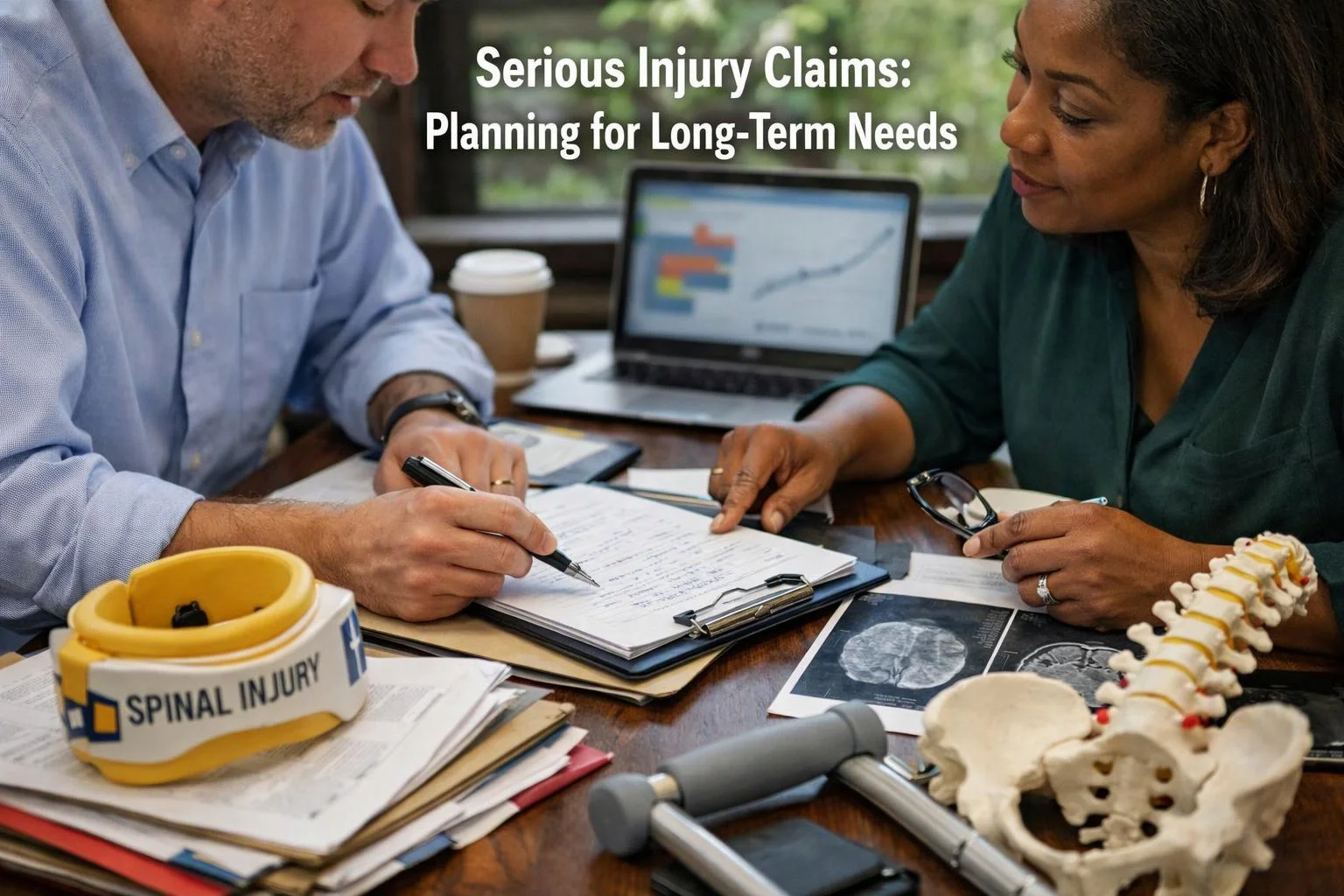
A person may need caregiving or home adaptations because of the combined injuries. We consider those needs together when reviewing a care plan.
How can claim support for overlapping injuries work together?
Claim support for overlapping injuries can connect shared evidence and assess how care needs affect each other. We use that picture to explain the losses a claim may seek.
What evidence supports a serious injury claim?
Medical records, work records and evidence of daily limits can help support a serious injury claim. We review treatment recommendations and care records to understand current and expected needs.
Employment records can help show lost income and changes in earning ability. We also consider evidence of daily limitations, such as difficulty with routine tasks.
Why does a settlement need to account for future needs?
A settlement needs to account for future needs because its terms may release claims for later losses. We review the proposed terms alongside the evidence of future care and other losses.
The effect of a release of claims depends on the agreement and applicable law. We can explain how the terms may affect your case before you decide whether to settle.
Contact Atlanta Auto Law to discuss your injury and future needs. We offer Free Consultations.
Request a QuoteWhat Are the Key Specifications to Know?
- Topic Focus
- Serious Injury Claims: Planning for Long-Term Needs
- Related Core Service
- Brain Injury Claims
- Evaluation Method
- On-Site Inspection & Written Scope
- Compliance Standard
- Local Building Code & Manufacturer Specs
How Does the Evaluation & Execution Process Compare?
| Evaluation Stage | Technical & Quality Criteria | Timeline Checkpoint |
|---|---|---|
| Initial Diagnostic & Assessment | Identify root cause, site constraints & code requirements | Before any work begins |
| Written Scope & Option Comparison | Compare repair vs. replacement tiers & material grades | Prior to project approval |
| Code-Compliant Execution | Follow manufacturer specs & local permitting standards | During active service |
| Final Verification & Walkthrough | Verify installation alignment, performance & clean site handoff | Upon project completion |